

CCEP × Blulinc
The 10% isn't the number that matters.
A markup on public charging sessions is one line in a much larger bill. The number that moves CCEP's budget is the total cost of every kWh the fleet consumes, at home, at the depot and on the road. Manage the first two well and the third stops being the argument.
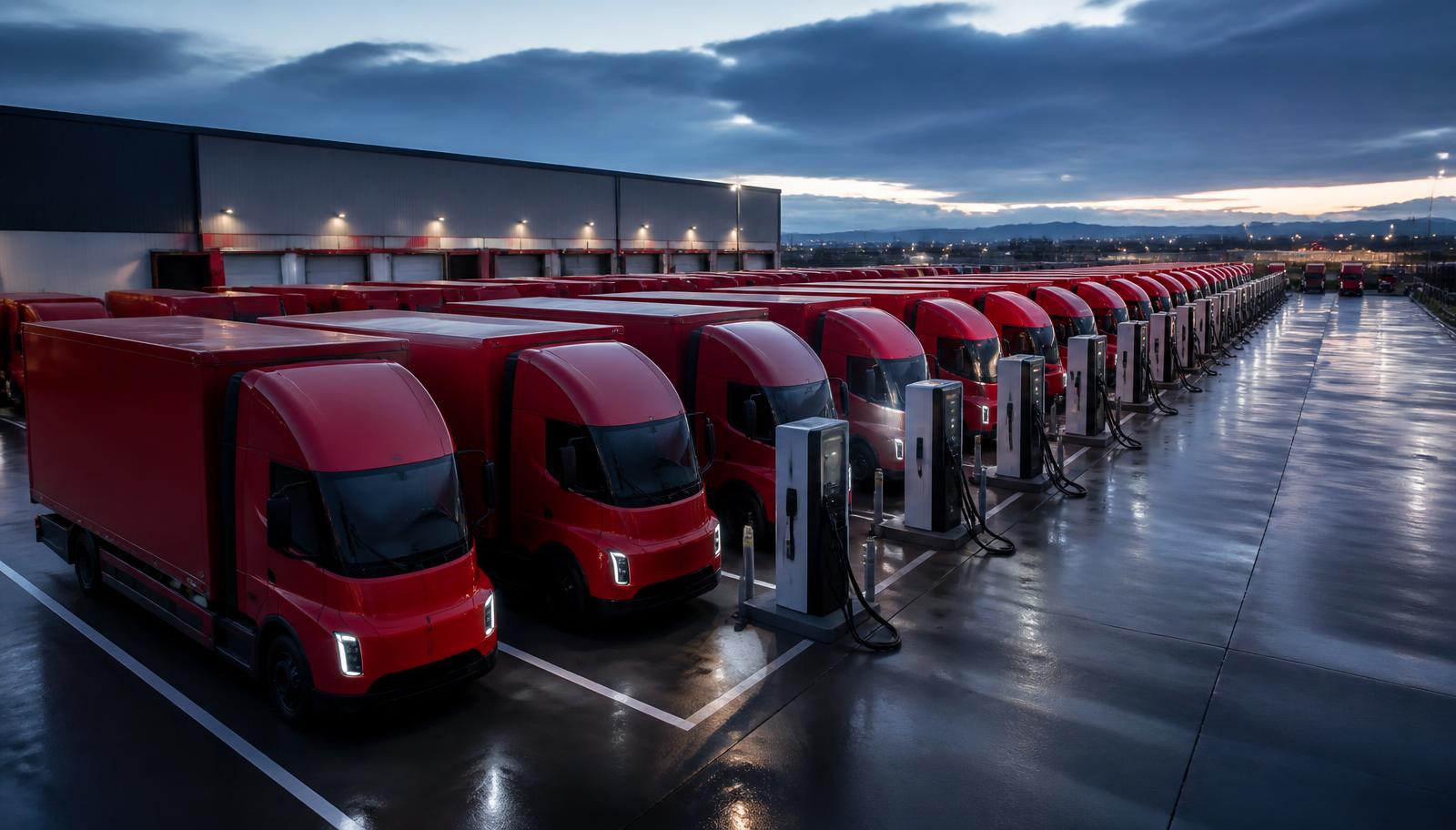
Two ways to read the same tender.
What gets compared
Per-session markup
A percentage on public sessions. Easy to line up in a spreadsheet, and worth roughly €0.03 to €0.04 per kWh in practice.
Small lever.
What decides the budget
Total fleet energy cost
Every kWh across home, depot and public, priced against dynamic contracts, solar, battery storage, peak charges and where drivers actually plug in. This is where €0.05 to €0.08 per kWh is available.
Large lever.
The arithmetic
Where our margin sits, and where your savings come from.
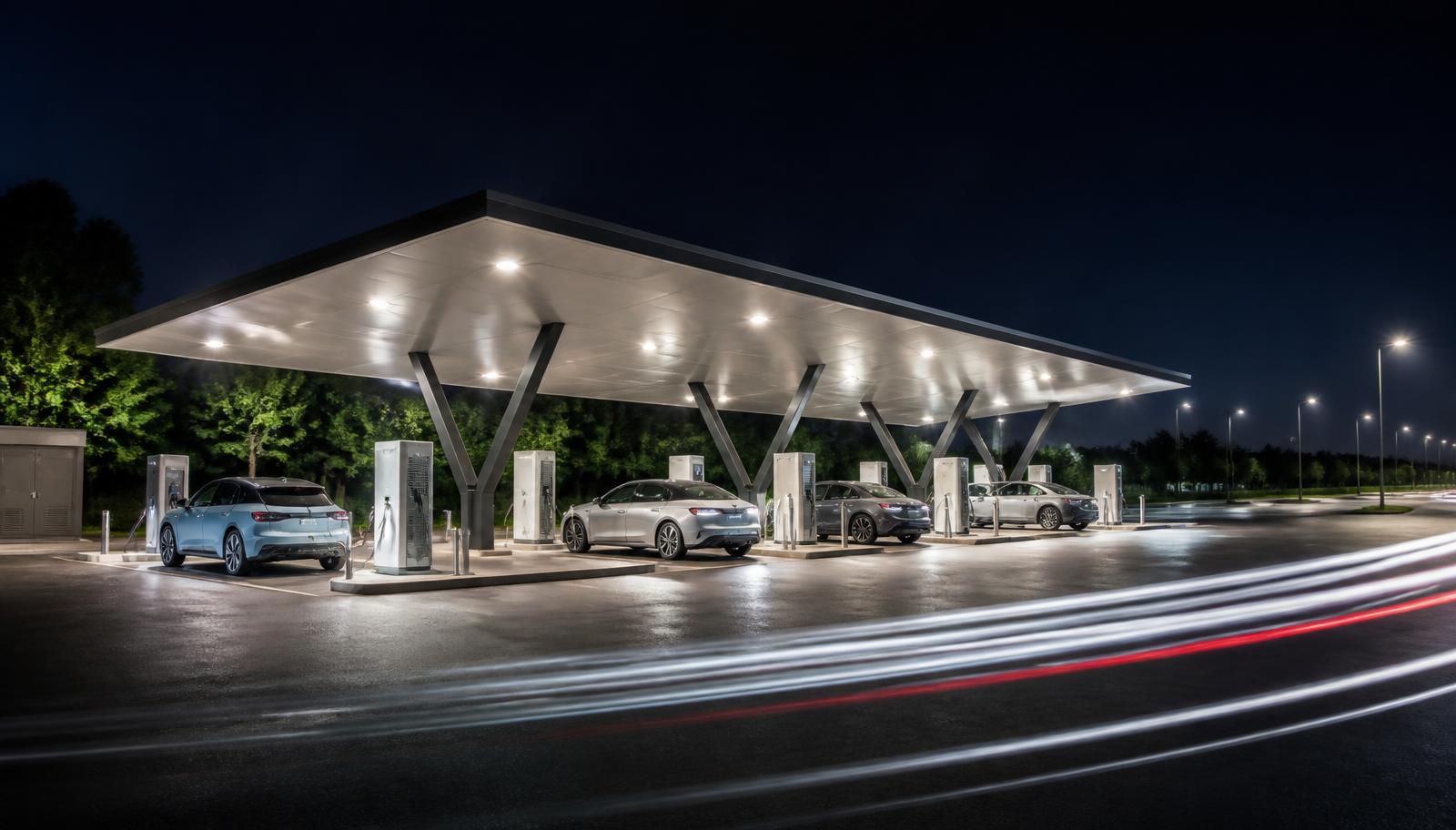
Cost to CCEP
Public charging margin
10% markup embedded in the displayed tariff. AC sits around €0.40 to €0.50 per kWh, DC around €0.65 to €1.00 per kWh.
Effective gross margin
€0.03 to €0.04
per kWh, after AC and DC mix
Volume tiers step the markup down to 5% at the committed CCEP volume across the agreed scope, so the line shrinks as the fleet grows.
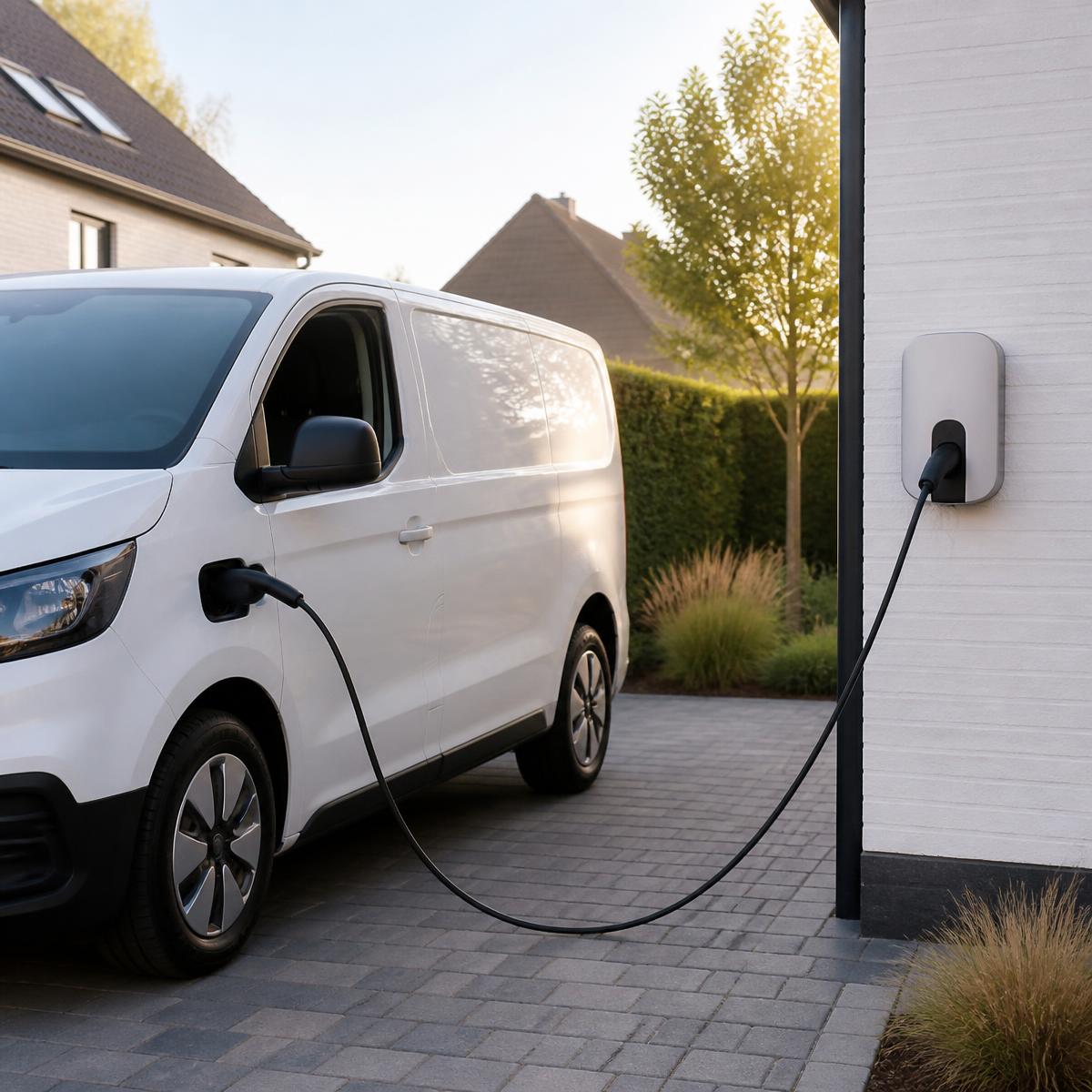
Saving for CCEP
Depot and home energy
Dynamic energy contracts, solar and battery storage combined, measured against baseline industrial tariffs.
Effective reduction
€0.05 to €0.08
per kWh charged at home or depot
The saving range starts above the top of the markup cost, before any behavioural steering through the loyalty program is counted.
Ranges are typical for Blulinc depot deployments. Final figures for CCEP's fleet will be modelled on live consumption data before contract start.
How the price is built
Every line item, separated.
In line with CCEP's transparency requirements, idling and blocking fees are split out from the standard energy charging fees in all transaction data and invoicing. They are never bundled into the per-kWh price.
| Component | Basis | Notes |
|---|---|---|
| Energy price (kWh) | Pass-through of actual CPO or network tariff | Varies by charge point operator, speed tier and country. |
| Blulinc markup | 10% standard, tiered down with volume | See volume discount table in the commercial section. |
| Connection fee | Pass-through of CPO or network connection fee, plus 10% markup | Varies by network and country; underlying fee passed through as charged. |
| Idling / blocking fee | Pass-through of CPO or network idling fee, plus 10% markup | Grace period before charging applies varies by network and country. |
| Parking fee | Pass-through where charged by site host, plus 10% markup | Not controlled by Blulinc; billed as incurred. |
Discounted pricing at Blulinc-managed chargers
Depot and home sessions on Blulinc-managed hardware are billed at site energy cost plus a flat management fee of €0.02 per kWh. They do not carry the 10% public charging markup. This is where the €0.05 to €0.08 per kWh saving comes from.
We also support extending the grace period before blocking fees apply, where this is within Blulinc's or the relevant network's control. Specific grace periods per network and country are confirmed during contract finalisation.
5-year view
We do not control energy prices. We control where the fleet charges.
Public charging
The per-kWh price is the CPO market tariff plus our markup. Wholesale, grid fees and regulation set the base; Blulinc does not mark up anything we do not control.
Depot and home
Costs follow local energy contracts, solar generation and battery storage. These are the levers CCEP can pull, and they are larger than the public markup.
What this means for the tender
A percentage on public charging is a small line on an uncontrollable base. The real budget movement comes from shifting volume to the controllable locations.
Illustrative model
Move the slider, watch the balance.
This is an illustrative model built on the ranges above. It is not a quote.
70%
2,800,000 kWh depot or home, 1,200,000 kWh public.
Public margin cost
€36,000
to €48,000 per year
Depot and home saving
€140,000
to €224,000 per year
Conservative net position per year
+€92,000
Lowest saving estimate minus highest margin cost. Loyalty steering and peak shaving are not included here.
What else is in the model
Six parts that do the actual work.
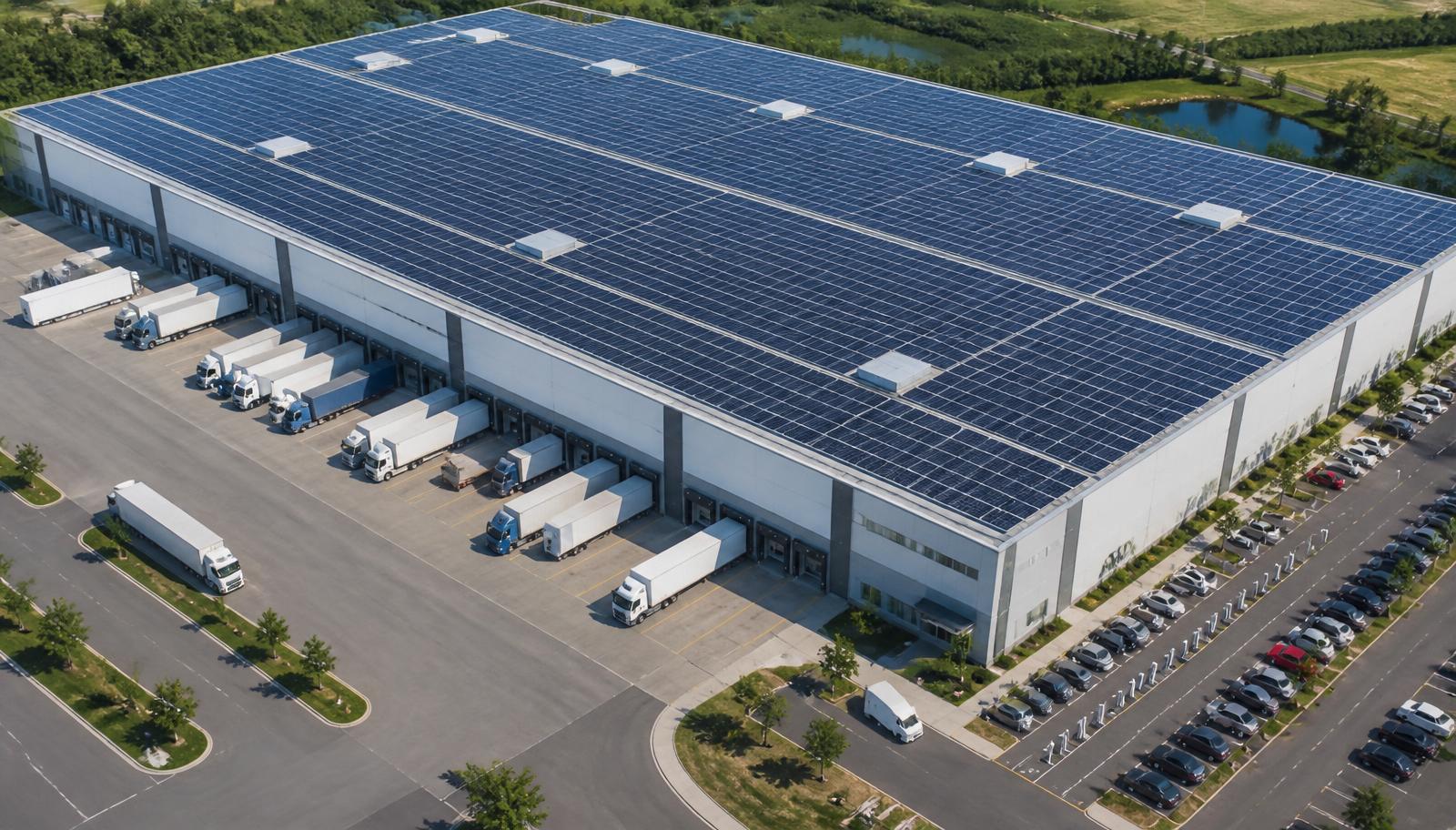
Home charging with reimbursement
Drivers charge at home on their own meter. Blulinc measures the session and reimburses per country rules, so no one argues about a utility bill.
Depot charging with Split Bill 2.0
Cost split rules per country and per fee type. Employer, driver and site owner each get the share they are meant to pay.
Load balancing and peak shaving
Dynamic charging speeds adjust to available capacity and price signals. Peaks stay under the contracted limit, which keeps capacity charges flat.
Solar and battery integration
On-site generation and storage feed the chargers first. Grid import becomes the fallback rather than the default.
One card for fuel and EV
Fuel, car wash, tolls, parking and EV charging on one Revolut-based mobility card. One invoice and one data set for procurement instead of separate suppliers.
Loyalty program
Drivers earn on cheaper and greener locations. Behaviour shifts without a memo from head office.
Behaviour, not policy
Loyalty points steer drivers to the cheap kWh.
The same principle CCEP already ran with Lean and Green: make the better behaviour visible and reward it. Here the reward sits on the location type, so the driver picks home or depot over a fast charger on the ring road because that is where the points are.

Charge
The driver plugs in at home, at a depot or in public. Nothing extra to do.
Earn
Points are added automatically, weighted per location type.
Redeem
Vouchers, charging credit, or any benefit CCEP wants to offer.
Repeat
The cheaper location becomes the default choice, not the exception.
Earning rules do the steering
| Where the session happens | Points | Why CCEP wins |
|---|---|---|
| Home charging | Highest weight | Cheapest kWh for CCEP and reimbursed at a fixed rate. Every session moved here is direct saving. |
| Depot charging | High weight | Site tariff plus smart charging on off-peak windows. Second cheapest per kWh. |
| Preferred public networks | Medium weight | Steers drivers to the negotiated tariffs instead of the most expensive plug on the motorway. |
| Non-preferred public | No points | Still works, still one card. It simply does not earn. No policy memo needed. |
more repeat sessions on rewarded locations
utilisation per chargepoint
lower driver churn
first-year return on the loyalty module
Rewards CCEP chooses
Points convert to vouchers, charging credit on the card, or any benefit CCEP already uses internally. Best driver of the quarter per site is a reporting toggle, not a project.
CCEP-branded, optional
The loyalty layer runs inside the white-label app, so drivers see CCEP, not us. It is a module on top of the platform, not a separate contract or a separate login.
Scope we propose
Belgium and the Netherlands. France if you want it.
We would rather bid on two markets we run well than on a map we cannot serve. That also fixes the volume problem: Belgium alone never reaches 15,000,000 kWh per year, so the tier has to be measured on the scope we actually agree.
| Country | Status | Detail |
|---|---|---|
| Belgium | Launch country | Home market, operational since day one. 15,000 charge points in own management, mainly semi-public or private. Depot and home installations, own DC and AC chargers on site, local entity and VAT in place. |
| Netherlands | Launch country | Active depot and home installations. Local VAT registration can be arranged in 2 to 4 weeks if CCEP requires local invoicing. |
| France | Optional, phase 2 | Operational for depot and home installations. Added only if CCEP wants it in scope, with the same 2 to 4 week path to local VAT. |
| Germany and further markets | Not in this scope | Depot and home installations are starting up for another customer. We do not put it forward as part of the CCEP proposal. |
Of charge points connected as an eMSP. Nearly 1 million charging points are reachable across Europe today through roaming.
Expected by year end. The limit is CPO contract approval speed, not technical integration.
Weeks per country to set up local VAT. Cross-border invoicing works in the meantime.
For MSP-only service, operations can run centrally while invoicing stays local. We are not asking CCEP to be our first large customer in a market we do not yet run.
Round-one feedback
Every concern from round one, answered.
Written so it can be defended internally without needing us in the room. Where the answer is no, it says no.
The 10% markup sits above what we benchmark on public charging.
Correct on the public line, and that line is the smaller one. Public margin is €0.03 to €0.04 per kWh. Depot and home management saves €0.05 to €0.08 per kWh on a much larger share of the volume. The calculator above runs on your own mix.
The volume tiers are unreachable for us.
They were built for a Europe-wide bid. In Belgium alone 15,000,000 kWh per year is simply not achievable, and 2,000 vehicles in one country is not either. We move the threshold to the committed volume across the agreed scope, Belgium and the Netherlands, France if added.
We prefer a fixed cost per vehicle over a percentage.
Acceptable, on measured data. Run 6 to 12 months on the agreed markup, then convert to a fixed monthly cost per vehicle based on the real sessions. We do not want to price a fixed fee on assumptions and be wrong in either direction.
Can you cover all CCEP markets?
No, and we will not claim it. Belgium and the Netherlands are live, France is available on request. Germany and the rest are outside this proposal. Drivers travelling outside the scope still charge through roaming.
We need local entities, local VAT and compliant invoicing.
Belgium is in place. The Netherlands and France take 2 to 4 weeks to register, and cross-border invoicing covers the interim. For MSP-only service, operations stay central while the invoice stays local.
Your CSR credentials are not documented yet.
EcoVadis assessment is underway, targeting completion within 6 months of contract start. What already exists is listed below: electric internal fleet, solar being installed at our headquarters, own DC and AC chargers on site, carbon and energy credit trading for depot charging above 50 kW.
We want proof of home reimbursement and split billing at CCEP scale.
This is the one item we cannot yet put on paper with hard figures. We are preparing customer cases on home reimbursement and Split Bill 2.0 with volumes and error rates, and we would rather send them late than send estimates. Until then, a pilot on one CCEP depot plus a driver group is the honest proof.
CCEP has its own brand power and volume to negotiate CPO tariffs.
Use it. Option D gives CCEP a dedicated MSP ID, so you negotiate directly with operators such as Fastned, Electra and Ionity on your own volume and pay Blulinc a platform fee. Whatever you win on tariff stays with CCEP and offsets the service fee. Outside the white-label option, Blulinc can also open direct CPO connections for preferred-network tariffs.
What does integration with our lease companies cost?
Nothing at Blulinc's side. If CCEP wants charging bundled into a lease, we invoice per lease term to the leasing company, which passes the cost through to CCEP. There is no separate integration fee.
How large is your own charging network in Belgium?
Blulinc has 15,000 charge points in own management in Belgium, mainly semi-public or private. As an eMSP we are connected to more than 98% of charge points, which means nearly 1 million points are reachable today.
Commercial paths for round 2
Four ways to reshape the 10%.
Option A
Volume-committed markup
The 15,000,000 kWh per year threshold is unreachable in Belgium alone, so it goes. The 5% tier applies to the committed CCEP volume across the agreed scope, Belgium and the Netherlands, France if added.
Option B
Card fee on group volume
The monthly card fee step drops on total fleet size across countries rather than on 2,000 vehicles in a single country, a threshold CCEP does not reach anywhere.
Option C
Split markup by use case
Lower markup on public sessions, priced service fee on home and depot management. Procurement sees the public number it benchmarks, we keep the service funded.
Option D
White-label with CCEP MSP ID
A CCEP-branded app and charging pass, fully in Coca-Cola Enterprise branding. Blulinc runs the platform and first-line support. Platform fee from 5% down to 2%, plus a setup fee and monthly service cost.
After 6 to 12 months of live data, any of these can be converted into a fixed cost per vehicle. We would rather agree that on measured volumes than on assumptions.
What the contract looks like in practice
Direct CPO connections
Blulinc can open direct connections to preferred CPOs for discounted roaming tariffs. Under the white-label option, CCEP negotiates directly on its own MSP ID and keeps the tariff gains.
Payment terms
Fuel and EV charging: 7 days from date of invoice. Subscription and service fees: 30 days, or 2 months upfront followed by monthly billing if CCEP prefers cash-flow predictability.
One card for fuel and EV
The Revolut-based mobility card covers fuel, car wash, tolls, parking and EV charging. One invoice, one data set and one supplier relationship for procurement.
Liability and indemnification
Liability and indemnification clauses are already agreed in the draft contract. We can share the current redlines before round 2.
LeaseCo integration
Blulinc has no integration cost. If CCEP wants charging bundled into a lease, we invoice per lease term to the leasing company, which passes the cost through to CCEP.
Ancillary services
Car wash, tolls, parking and fuel sit on the same mobility card. One invoice line per employee instead of four separate supplier relationships.
Option for round 2
Your app. Your pass. Our platform.
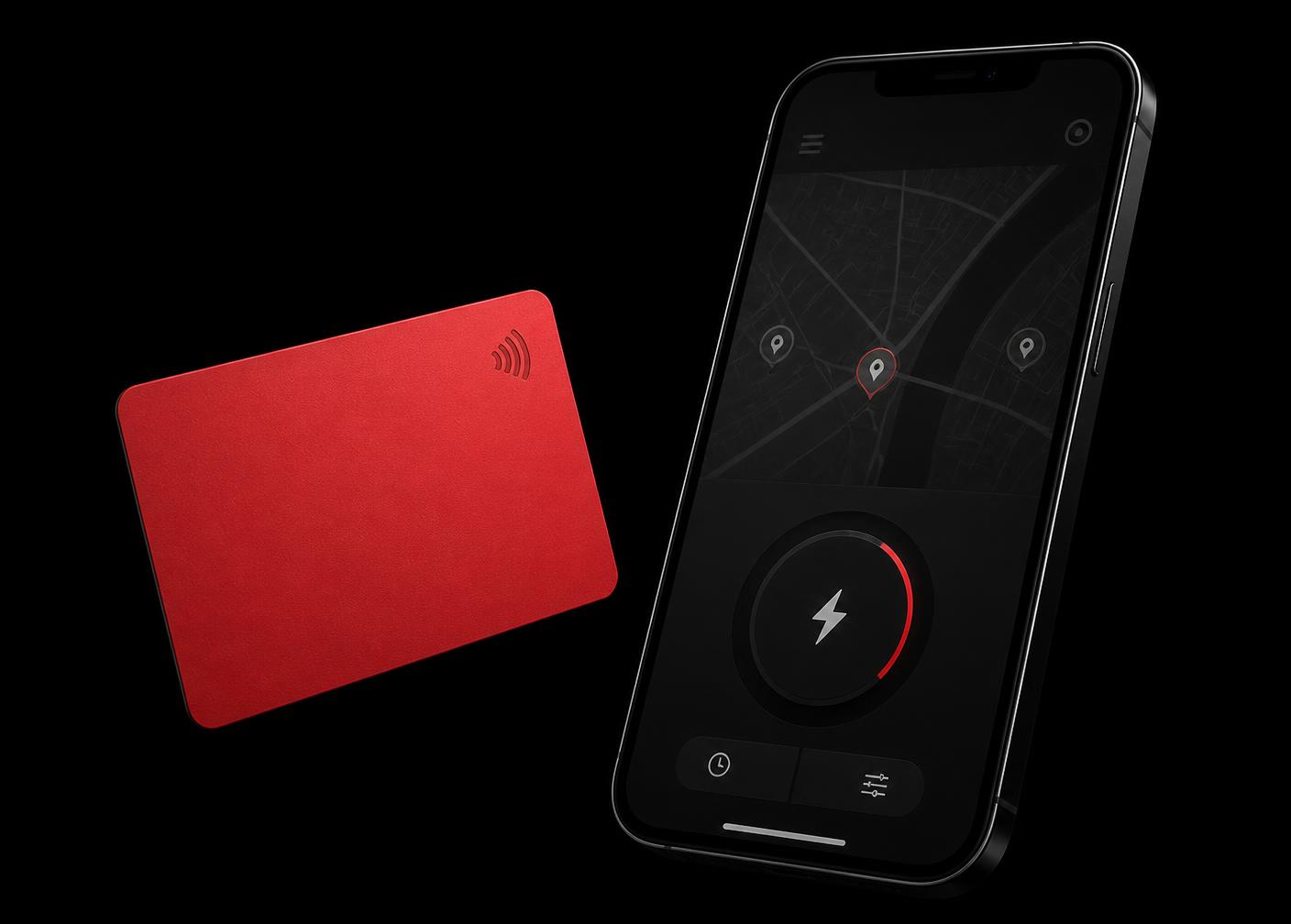
One card, one app, one brand on the surface. Blulinc handles the operator contracts, roaming, invoicing and driver support behind it. Drivers never see two logos, they see yours.
True white label
Drivers open a CCEP-branded app and tap a Coca-Cola Enterprise branded charging pass. Blulinc is invisible on the surface and runs first-line support underneath.
5% down to 2%
The white-label platform fee scales from 5% to 2% as volume grows. A setup fee and monthly service cost apply. CCEP negotiates its own operator tariffs on a dedicated MSP ID, so tariff wins stay with CCEP.
First mover
One of the first companies to run its own charging application. The same early move CCEP made with Lean Green, now applied to fleet charging.
An option to explore in round 2, not a commitment from either side.
Sustainability and CSR
What we already run ourselves.
- Fully electric internal fleet, with the exception of some subcontractors.
- Solar panels currently being installed at our headquarters.
- DC and AC chargers on site at our own location.
- Carbon and energy credit trading for depot charging above 50 kW.
- Formal Carbon Reduction program and CRS approach to be documented during onboarding, with a first plan within 6 months of contract start.
EcoVadis assessment underway, targeting completion within 6 months of contract start.
Procurement FAQ
Short answers to the questions that keep coming back.
How does smart charging save money?
Smart charging shifts load to off-peak hours, limits peak capacity and integrates solar or battery storage. On Blulinc-managed sites this cuts €0.05 to €0.08 per kWh compared with public charging.
What is loyalty steering?
Drivers earn points for charging at home or the depot, fewer or no points for public charging. Points can be redeemed for vouchers or benefits CCEP chooses. This mirrors the Lean and Green approach: reward the behaviour that cuts cost.
What does depot energy management cover?
Load balancing, peak-shaving, solar and battery integration, and reporting per site and vehicle. Depot and home sessions on Blulinc-managed hardware are billed at site energy cost plus a flat €0.02 per kWh management fee.
What does the white-label option mean for CCEP?
A CCEP-branded app and charging pass, with CCEP negotiating directly on its own MSP ID. Blulinc runs the platform and first-line support. Platform fee from 5% down to 2%, plus a setup fee and monthly service cost.
Who owns the data?
CCEP owns its transaction and driver data. Blulinc provides exports, dashboards and API access. No data is used beyond delivering the service.
How fast can we go live?
Belgium is operational from day one. The Netherlands and France need 2 to 4 weeks for local VAT setup. A pilot on one depot and a driver group can be live within 6 to 12 weeks of contract signature.
Tender calendar
Round 2 dates.
| Item | Start date | End date | Duration |
|---|---|---|---|
| Round 2 launch | 24/08/26 | 07/09/26 | 2 weeks |
| Clarification | 08/09/26 | 15/09/26 | 1 week |
| Allocations | 19/10/26 | 30/10/26 | 2 weeks |
We will keep the response short and data-driven. Give us the depot list and consumption data and we can model the business case on CCEP's own numbers before the allocation window.
Let's model this on CCEP's real consumption data.
Give us the meter data and the depot list, and round 2 can run on your numbers instead of our ranges.
Cihan Kranda
CEO, Blulinc
All figures indicative pending round 2 data modelling. Full commercial terms via Keelvar.